
For years, ground transportation operators have run their pricing the same way: a massive spreadsheet, hundreds of zip code pairings, manually estimated drive times, and a gut feeling for surcharges. It worked well enough when the industry was simpler. It doesn’t anymore.
The operators who thrive in the next five years won’t be the ones with the biggest fleets. They’ll be the ones who quote faster, price smarter, and protect their margins on every single trip — without spending hours buried in a rate table.
That era of guesswork is over. Here’s why.
The Structural Problem With Zip-to-Zip Tables
Ask any dispatcher who has managed a large zip-to-zip rate table, and they’ll tell you the same thing: the moment you publish it, it’s already wrong.
Traffic patterns shift. New roads open. Competitor pricing moves. A major event books out your city, and suddenly your standard rate for downtown pickups is leaving money on the table. But your table doesn’t know any of that. It just sits there, static, reflecting the market conditions from the day you built it — not the day you’re quoting.
The problem isn’t discipline. Operators aren’t lazy for not updating their tables every week. The problem is structural. Manual rate tables were never designed to keep pace with a dynamic, real-world market. They were designed for consistency, and they deliver that — consistently stale pricing.
The downstream effects are serious:
Underpricing happens when your table doesn’t account for surge demand, longer-than-expected routes, or increased operational costs. You take the booking, run the trip, and net less than you should have.
Overpricing happens when you pad rates to compensate for uncertainty. You win fewer bookings. Your affiliate network starts routing around you.
Slow quoting happens when your dispatcher can’t find the right zip pairing, or the trip spans zones your table didn’t anticipate. Every delay costs a booking.
In a competitive market where operators respond to RFQs in minutes, not hours, pricing friction is a real competitive disadvantage.
What Data-Driven Pricing Actually Means
The term “data-driven” gets used loosely in almost every industry. In ground transportation pricing, it has a specific meaning: your rates should be derived from real trip data — actual bookings, actual routes, actual outcomes — not from someone’s best estimate of what a trip from Zip A to Zip B should cost.
A well-designed pricing engine does several things that a static table simply cannot:
It reflects real routes, not theoretical ones. The distance from an airport pickup to a downtown hotel isn’t the distance Google Maps gives you on a clear Tuesday morning. It’s the distance accounting for typical routing, traffic patterns, and the practical realities of running that trip at 6 AM on a Monday versus 3 PM on a Friday.
It incorporates demand context. When your city is hosting a major conference, rates across every operator in the market shift — because vehicles are scarce and demand is high. A data-aware pricing engine understands this context. A zip-to-zip table does not.
It gets smarter over time. Every trip that runs through a sophisticated rate engine is a data point that can improve future estimates. Your pricing becomes more accurate the more you use it, rather than degrading as market conditions drift away from your last manual update.
It requires no maintenance. This might be the most underrated benefit. The hours your team spends maintaining rate tables, handling exceptions, correcting errors — those hours disappear. Your dispatchers can focus on what matters: managing bookings and delivering great service.
Introducing GRate: Built for Ground Transportation
Most pricing tools in the transportation industry were built for rideshare, freight, or logistics use cases and then adapted for chauffeured ground transportation as an afterthought. The nuances of the limo and fleet industry — affiliate relationships, vehicle class differentiation, event-driven demand, regional operator networks — get lost in translation.
GRate was built from the ground up for this industry.
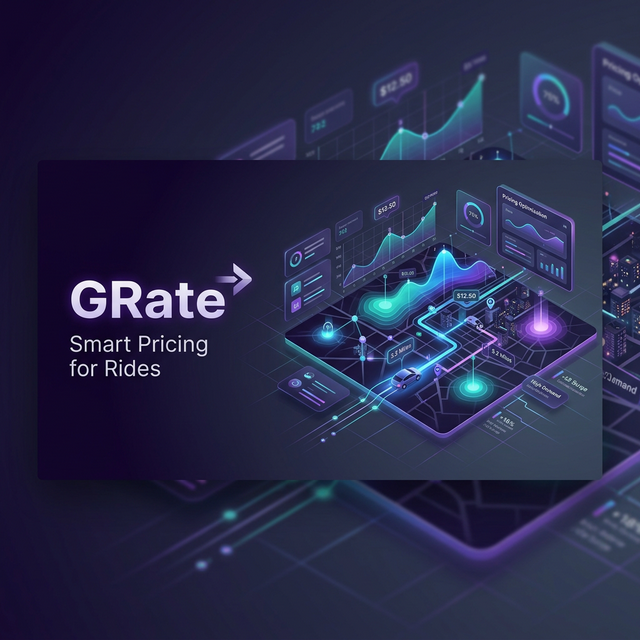
Available to GNet Connect Professional and Premium plan members, GRate uses proprietary algorithms and historical trip data from across the GNet network to generate instant, reliable rate estimates. Enter a pickup address, drop-off address, and vehicle type. In seconds, GRate returns a suggested price grounded in real market data.
Here’s what makes it different:
Instant estimates, every time. No zip-code lookups. No table searching. A price in seconds, every time a dispatcher needs one.
Zero maintenance. GRate doesn’t require you to build or maintain rate tables. The engine continuously improves as more trip data flows through it. You set up nothing and maintain nothing.
Full operator control. GRate gives you a data-backed suggested rate. You always make the final call. The engine is a starting point, not a constraint — you retain full authority over your quote.
Built into GNet Connect. GRate isn’t a separate tool you have to integrate or pay for separately. If you’re on a Professional or Premium plan, it’s already waiting for you.
The Operator Who Switched
Consider what changes when your dispatcher stops looking up a zip-to-zip table and starts querying GRate instead.
A client calls for a quote on an airport transfer — a route your team runs dozens of times per week. Instead of pulling up a spreadsheet, cross-referencing zones, and mentally adjusting for the fact that traffic has been terrible on that corridor lately, your dispatcher enters the pickup and drop-off, selects the vehicle class, and gets a suggested rate in seconds.
That rate reflects real trip data from that route. It reflects current market context. It’s not a guess dressed up in a spreadsheet.
Your dispatcher reviews the suggested rate, applies any necessary adjustments for the client relationship or specific circumstances, and sends the quote. The whole process takes under a minute.
Now multiply that across every quote your team handles in a week. The time savings alone are material. But the real value is in the margin protection — quotes grounded in data rather than guesswork mean fewer trips where you left money on the table, and fewer quotes that scared away bookings with inflated rates.
The Pricing Problem Is Solvable
Ground transportation operators have been dealing with the pricing accuracy problem for so long that many have started to accept it as an industry constant. It isn’t. It’s a solvable problem — and the solution is already built.
The operators who will lead this industry over the next decade are the ones investing in tools that compound: tools that get smarter, that reduce operational overhead, and that let their teams focus on relationships and service quality rather than spreadsheet maintenance.
GRate is that tool for pricing.
If you’re on GNet Connect Professional or Premium, you already have access. There’s no setup, no additional cost, no lengthy onboarding.
Start quoting with confidence — explore GRate here.
GRate is available to GNet Connect Professional and Premium plan subscribers. Log in to your GNet Connect account to get started.
GRiDD Technologies builds the connectivity infrastructure for global ground transportation. GNet Connect links 5,400+ operators across 80+ countries.
Leave a Reply